FREQUENTLY ASKED QUESTIONS
People ask me a lot of the same things, and they are good questions. So here they are, answered the way I would answer them if you were standing in the studio. No spin. Where something is made, I will tell you exactly where. What it costs, I will tell you why. And if a piece is wrong for you, I will tell you that too.
What is Black Bear Brand?
My name is Josh Sirlin. I design the line and I direct how every piece gets built, working with the mills, tanneries, and sewing rooms who are the best in the world at their part of it.
Who is Josh Sirlin?
That is me. I found this brand when it was dormant, brought it back in 2014, and I have led its design ever since. The design and the standard are mine. The execution belongs to the people I choose to build it with, and I say so because it is true and because their work is the reason it is good.
Is Black Bear Brand only a denim brand?
No, and that is half the fun. Denim is the spine, but the range runs through Horween leather jackets and vests, Harris Tweed coats woven in Scotland, Japanese corduroy, flannels and shirting, heavyweight terry sweats, hats, and a womens line. What holds it together is not a category. It is a standard.
What does A Way Of Life mean?
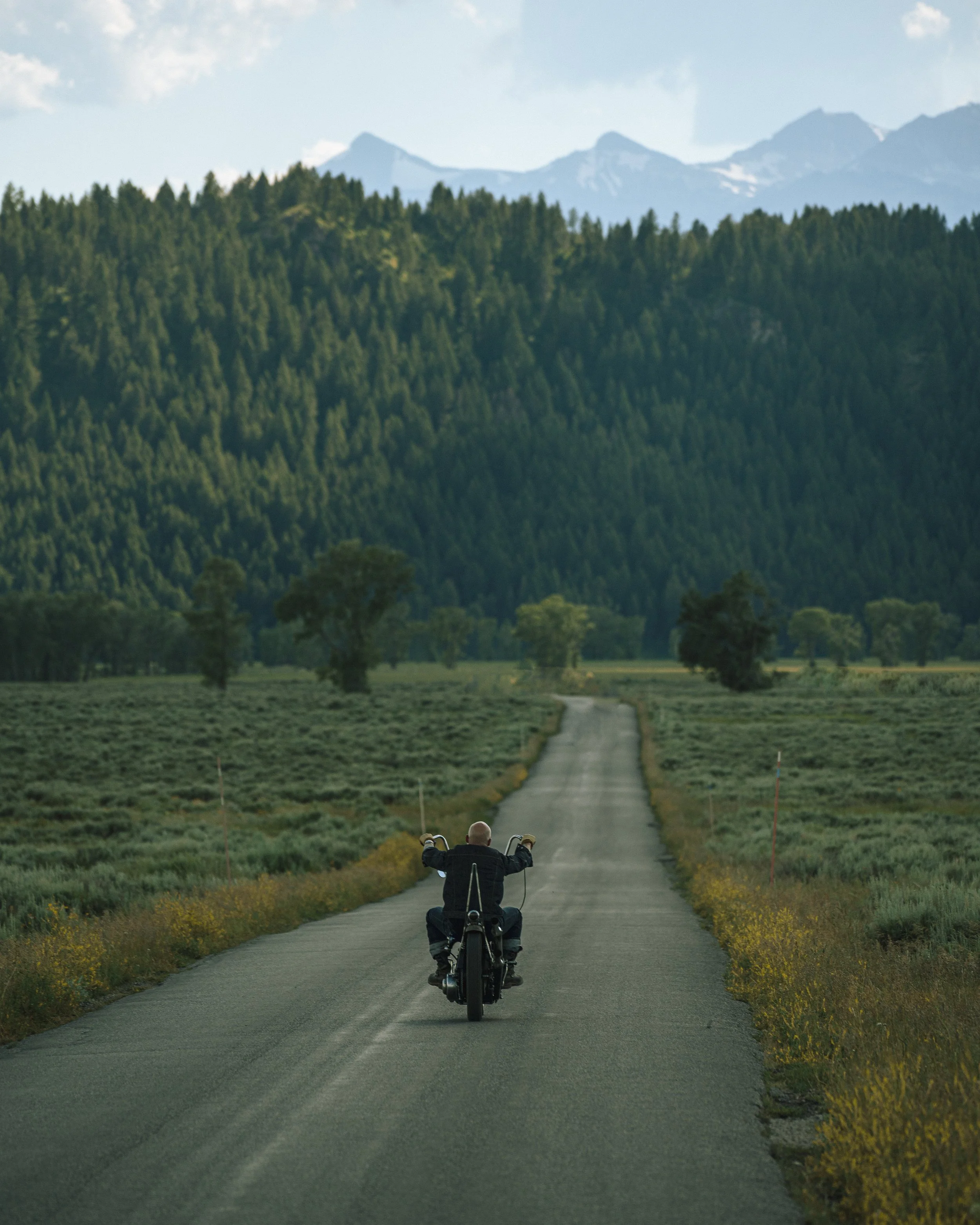
It means these are not display pieces. They are made to be ridden in, worked in, rained on, and repaired. A jacket that has been somewhere is better than a jacket that has not, and everything I make is built to reward the miles rather than punish them. The clothes are the visible part of a way of living. That is the whole idea.
THE HISTORY
How old is Black Bear Brand?
The original brand dates to the turn of the 20th century in Seattle. That makes this a genuinely old American label, not a new company borrowing an old look.
Who was George G. Black?
The founder. He ran Black Bear Brand out of First and Jackson in Seattle, and a 1927 account in the Seattle Times lays out what he was making: denim, wool jackets, shirting, corduroy, tin cloth pieces, coveralls. When I first read that list I had already been making most of it. That was the moment I knew I had found the right thing.
How did the brand come back?
I got obsessed. I found the name dormant and unowned, went and got it in 2014, and started rebuilding it around the same materials and the same intent, with everything I had learned since. It has been a long project and it is not finished.
Is this a real heritage brand or a revival?
Everything made under it now is designed by me and built with the people I choose to make it with.
WHERE IT IS MADE, AND WHY THERE
Where is Black Bear Brand made?
Between the United States and Japan, and I will give you the whole list. The denim is woven in Okayama, Japan, on shuttle looms, to our specification. The corduroy is woven in Japan. Harris Tweed is woven in the Outer Hebrides of Scotland. The leather comes from the Horween tannery in Chicago. Sewing happens in Seattle and in Japan depending on the piece: the 30oz terry is made in Seattle, the 20oz terry crews are made in Japan, and the boro pieces are built in Okayama by people who do that and nothing else.
Why is not everything made in the USA?
Because made in the USA is a marketing line, and I am not willing to make a worse piece in order to print it. The finest selvedge denim in the world is woven in Okayama. Harris Tweed cannot legally be woven anywhere but the Outer Hebrides, in the weavers own home. The best boro and sashiko work is done by people in Japan who have spent entire lives on it. And when the right room is in Seattle, we sew in Seattle. The rule is simple and it never moves: a piece gets made where it comes out best. Not where it is cheapest, not where it is easiest, and not where it sounds best on a label.
Why is the denim woven in Okayama?
Because that is where the people are. Okayama has spent decades building a depth of knowledge around indigo, shuttle looms, and cotton that does not exist anywhere else at that level. I have been going there for years, and the cloth we have woven now is the result of a long relationship rather than a purchase order. Shuttle looms run slow and narrow, which is exactly why the cloth has character and why the self edge is there at all.
Why Harris Tweed?
Because there is nothing else like it. Harris Tweed is protected by law: it has to be made from pure virgin wool, dyed and spun in the Outer Hebrides, and woven by hand in the weavers home. Each year three new tweeds are woven for us there, and I make three jackets from them. Three. That is the whole run, and once the cloth is gone it is gone.
Why Horween leather?
Horween has been tanning in Chicago since 1905 and they are still family run, which in this business is close to a miracle. Their horsehide and shell are the reference point that other leather gets measured against. I pick hides for specific pieces rather than ordering a grade, and the difference shows up around year three, when cheaper leather has gone flat and this has not.
Who actually sews the clothes?
Skilled sewing rooms that I choose piece by piece, in Seattle and in Japan. I am not going to pretend I sit at a machine and build every garment myself. What I do is design the piece, choose the cloth, specify the construction, pick the room that can execute it properly, and refuse to sign off until it is right. Some rooms are extraordinary at one thing and average at another, and knowing the difference is most of the job.
THE MATERIALS
What is selvedge denim and why does it matter?
Selvedge denim is woven on an old style shuttle loom, which produces a narrow bolt of cloth with a clean finished edge instead of a raw one. Shuttle looms are slow, which means the cloth is a little irregular, and that irregularity is what makes selvedge fade the way it does. It is not a decoration on the outseam. It is evidence of how the cloth was made.
What denim do you use?
Selvedge, exclusively, woven for us in Okayama. We do not use anything else and never have.
What is the corduroy?
Japanese corduroy, and it is one of the pieces of this brand I am proudest of. Corduroy is difficult cloth to get right. Get it wrong and it goes flat and sad. Get it right and it has depth and weight and it ages like denim does. It took a long time to find cloth I would put my name on.
What is the terry?
Heavyweight garment dyed terry, in two builds. The 30oz is made in Seattle and it is about as heavy as a sweat can be made before it stops being wearable. The 20oz crews are made in Japan. Both are cut generously because heavy terry shrinks and settles into the wearer over the first season.
What hardware do you use?
Custom poured brass, vintage style zippers, and a YKK donut button and brass zipper fly on the jeans. Hardware is where most pieces quietly fail, so it is worth the money and the wait.
THE JEANS
What goes into a pair of Black Bear Brand jeans?
Shuttle loom woven selvedge denim made for us in Okayama, triple needle construction, a YKK donut button, a brass YKK zipper fly, and a Horween horsehide roughout back patch. The denim is sanforized so the fit you buy is the fit you keep. Every detail on the pair got argued about longer than it should have.
Will they fade?
Yes, and this is the best part of owning them. Raw selvedge fades where your body and your life put stress on it, so the whiskers at the hip, the honeycombs behind the knee, and the wear at the pocket edge are a record of your year rather than a finish applied in a factory. Nobody elses pair will ever look like yours. That is the point.
What size should I take, and will they shrink?
The denim is sanforized, so take your normal size and expect it to hold. Raw denim will relax a little through the waist in the first couple of weeks and then settle. Every product page carries the measurements, and if you are between sizes or unsure, email customer service and describe what you are wearing now. We will tell you straight, including if the answer is that the cut is wrong for you.
How do I wash raw denim?
You wash it. The idea that you must never wash raw denim is folklore, and it has ruined more good jeans than washing ever has. Wear them a few months to set the creases, then wash cold, inside out, and hang them to dry. After that, wash them when they need it. Dirt is abrasive, and jeans that never get cleaned wear through faster, not slower.
How long should a pair last?
Years of regular wear, and they should be repairable well past that. Denim wears at the crotch and the hems first. That is normal and it is fixable, and a repaired pair is better looking than a new one.
What is Boro?
Boro is a Japanese tradition of layering and stitching cloth over generations, repairing rather than replacing, until the garment becomes a record of everyone who wore it. Our boro pieces are built in Okayama with layered indigo textiles and sashiko stitching, and they take a long time. Every scar in them is real. It is the oldest idea in this brand, and it arrived here from the other side of the world.
BEYOND DENIM
What else do you make?
Leather jackets, vests and chore coats in Horween hide, Harris Tweed coats, Japanese corduroy, flannels and shirting, heavyweight terry sweats, hats, footwear, a womens line, and a small number of projects with other makers I respect. A full wardrobe held to one standard.
What is the Leathertogs 1933?
My tribute to a rare pre war American moto jacket, rebuilt in custom Horween horsehide with vintage style zippers and brass poured for the piece. I kept everything the original got right and quietly fixed the handful of things it did not. It is the piece people ask about first.
What is the Northern Dream Vest?
Horween horsehide shell with a curly lambskin lining. It is warm out of all proportion to its weight and it looks better every year you own it.
Do you make womens pieces?
Yes. Black Bear Brand WOMAN is built to exactly the same standard, from the same cloth, with corduroy, denim, pearl snap shirts and outerwear. It is not a scaled down version of the mens line and it never was. The Woman Who Started It. Black Bear Brand WOMAN, in my words.
PRICE AND VALUE
Why does Black Bear Brand cost what it costs?
Because of what is inside it, and I am happy to break that down. Cloth woven on shuttle looms in Japan costs several times what commodity denim costs per yard, and the narrow width means a pair of jeans eats more of it. Horween hide is priced accordingly and I select rather than order by grade. Custom poured hardware is made for us in small quantities. Skilled sewing rooms charge skilled rates, and the construction I specify takes more machine time than a faster build would. Then the runs are small, so none of it gets the discount that volume buys. There is no mystery in the number. It is the sum of decisions I refused to reverse.
What am I actually paying for?
Material and time, in that order. Not advertising, because we have never run any. Not a wholesale markup, because we sell direct. Not a celebrity, because nothing here has ever been paid for.
Is Black Bear Brand worth it?
That depends entirely on how you buy clothes, and I would rather be useful than persuasive here. Nothing I make is a bargain on day one. It becomes one somewhere around year four, when the piece is still going, has gotten better looking, and you have not replaced it three times. If you enjoy owning a small number of things for a very long time, this is built for you. If you like changing your wardrobe every season, there are happier ways to spend the money.
How does it compare to other brands at a similar price?
I will not talk about anyone else, but I will give you the three questions to ask any brand, including this one. Who wove the cloth, where, and on what kind of loom. Where was it sewn and by whom. What is the hardware and who made it. If you cannot get a specific answer to all three, that is your answer. Ask us and you will get names and places every time.
Why are the runs so small?
Because the cloth is limited and I only make what I would wear. Three Harris Tweed jackets a year is not a scarcity tactic, it is how much cloth exists. Most pieces run in the tens rather than the thousands. It means things sell out, and it also means the person next to you is unlikely to be wearing yours.
Do you ever run promotions?
No. The price is the price, and it reflects what the piece cost to make. Marking it down would mean the number was never honest.
OWNING IT
Can pieces be repaired?
Yes, and I would much rather repair something than see it replaced. That is the entire philosophy of this brand and it would be strange to abandon it at the point it matters. Email customer service with photographs and we will work out the best route.
What if it does not fit?
Email customer service before you buy if you are unsure, and we will help you get it right the first time. Full terms for returns are on the Returns Policy page.
Do pieces come back once they sell out?
Sometimes, and often not. When the cloth is gone the piece is finished. If something is sold out and you want it, say so, because it does affect what I weave next.
How do I hear about new pieces?
Sign up for notifications on the site and follow along on Instagram and YouTube, where most of the process gets shown as it happens. Drops are small and they move quickly.
Can I see things in person?
Yes. Studio appointments are available in Seattle, and it is by far the best way to understand what these clothes actually are. Cloth is very hard to photograph and very easy to feel.
WHERE TO BUY
Where can I buy Black Bear Brand?
Directly from us at blackbearbrand.com. Selling direct is why the pricing works and why I can answer your email myself when it matters.
Do you ship internationally?
Yes, we ship worldwide from Seattle. Import duties and taxes vary by country and are the responsibility of the buyer.
Is there a Japan store?
Yes, at blackbearbrand.jp. Japan has been part of this brand for years, so it made sense to be properly present there rather than shipping everything across an ocean.
Where is Black Bear Brand based?
Seattle, Washington, where the brand started more than a century ago and where a good part of it is still made.
STILL HAVE A QUESTION?
Email customerservice@blackbearbrand.com. It reaches people who know the answer, and if it is a question about cloth or construction it will probably reach me. I like those emails.
Wear it hard. Repair it. Keep it.
A Way Of Life
— Josh